This is the full reference page for Sail Race Tracker — what it is, who built it, how the hardware and software fit together, what it costs compared to commercial systems, and the awards and press that recognised it. Designed and built by Jack Harker, ACG Parnell, Auckland, New Zealand.
Sail Race Tracker is a low-cost, open-source, SIM-free GPS race-tracking system for youth sailing dinghies. It uses long-range LoRa radio and a Raspberry Pi to plot every boat on a live web map — bringing professional, America's-Cup-style race tracking to clubs and schools without the cost or subscriptions of commercial systems.
Youth dinghy racing is fast and tactical, but almost impossible to follow from land — boats are small, far out, and look identical at distance. Coaches can only watch a fraction of the fleet; officials struggle to keep eyes on everyone; and parents see very little. Commercial tracking exists, but it is expensive, subscription-based, and built around phones and SIM cards that are banned in racing and unreliable on the water.
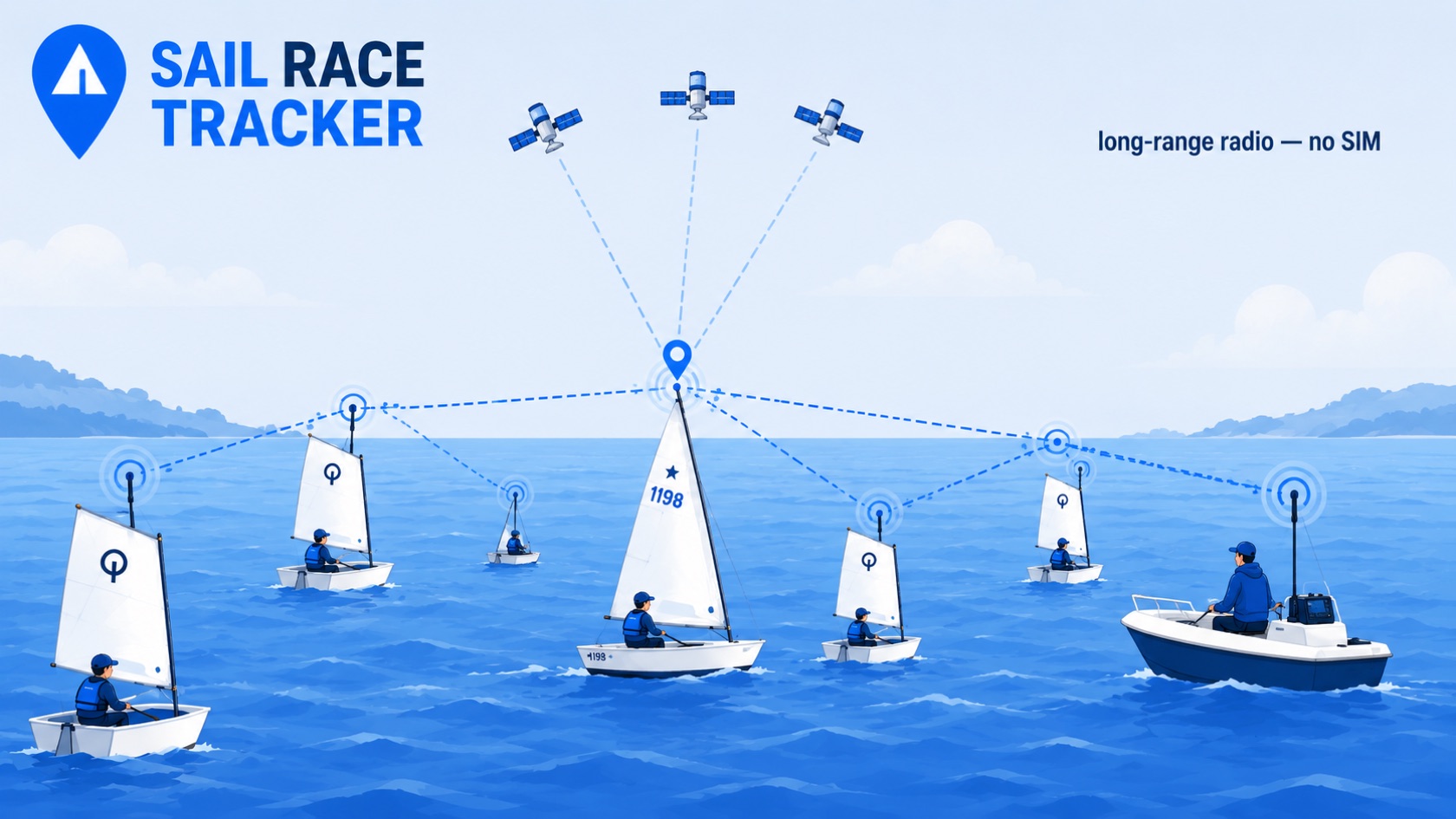
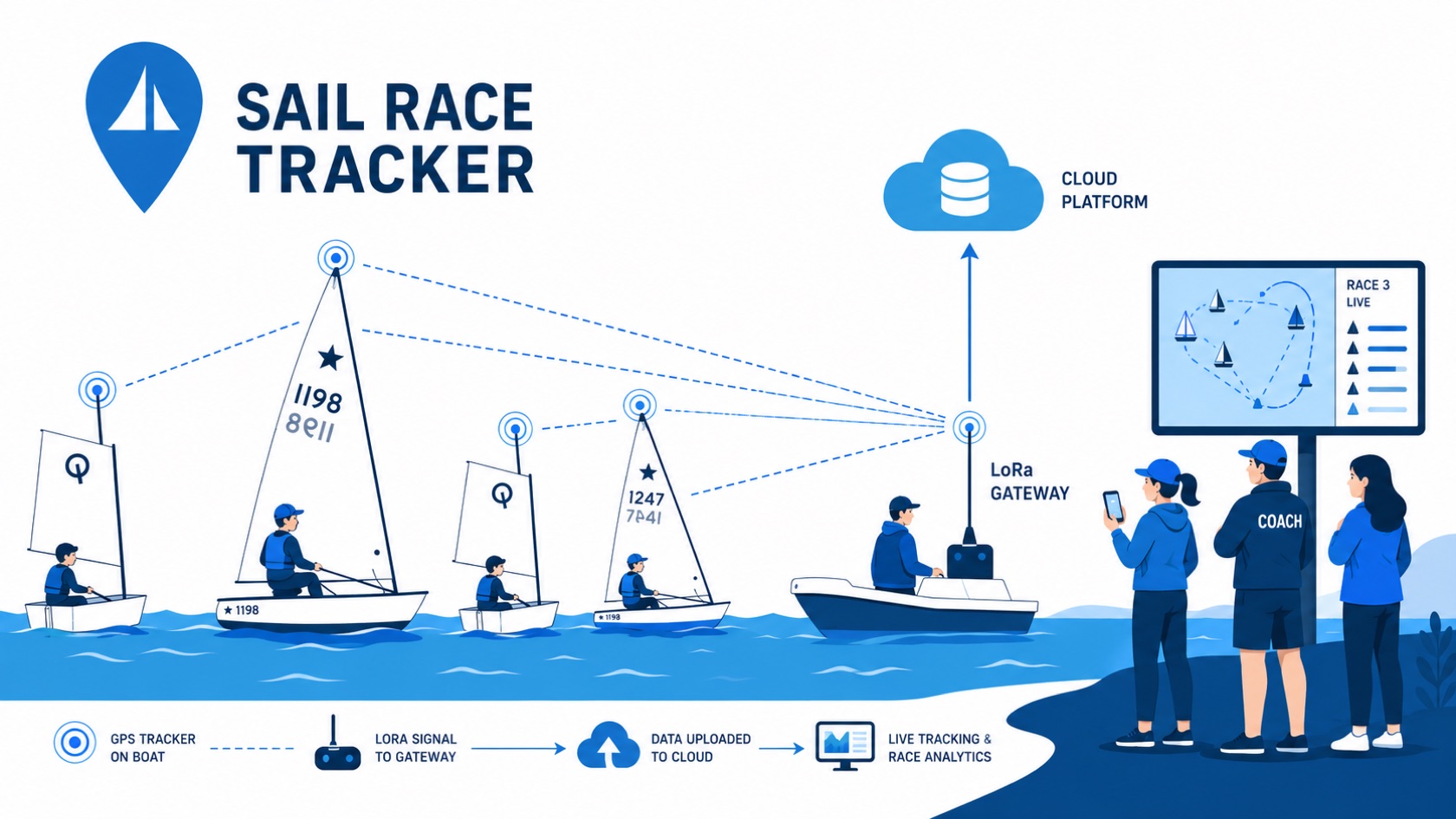
Sail Race Tracker closes that gap. Each boat carries a small waterproof tracker that reads its GPS position and broadcasts it over long-range LoRa radio. The signals are collected on a support boat and a Raspberry Pi, pushed to the cloud, and drawn live on a browser map — complete with boat trails, course marks, headings, a leaderboard and a full replay timeline. It is class-legal, needs no mobile data, and can be built for a fraction of the price of off-the-shelf systems.
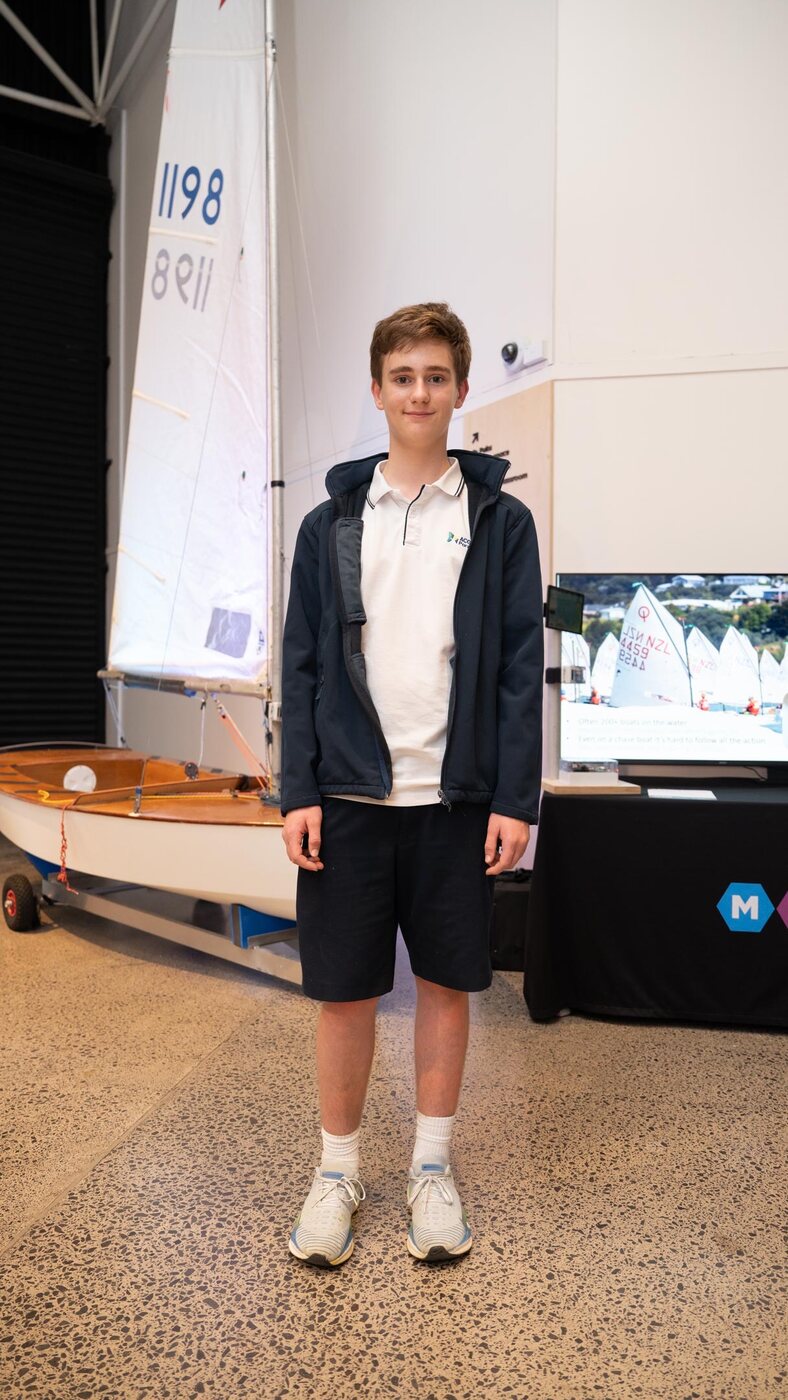
I'm Jack Harker, a competitive youth sailor and a student at ACG Parnell in Auckland, New Zealand. I built Sail Race Tracker because I lived the problem myself: the racing I loved was invisible to almost everyone watching from shore, and the technology that solves it only seemed to exist at the very top of the sport.
Over the course of roughly a year, I took the project from a research question to a working, on-water prototype — choosing the radio technology, designing the end-to-end system architecture, wiring and flashing the boards, writing the software, waterproofing the hardware, and field-testing with real clubs. I used AI as a 24/7 research tutor while doing all of the testing, coding and assembly hands-on, and documented every decision, dead-end and breakthrough in a detailed log book.

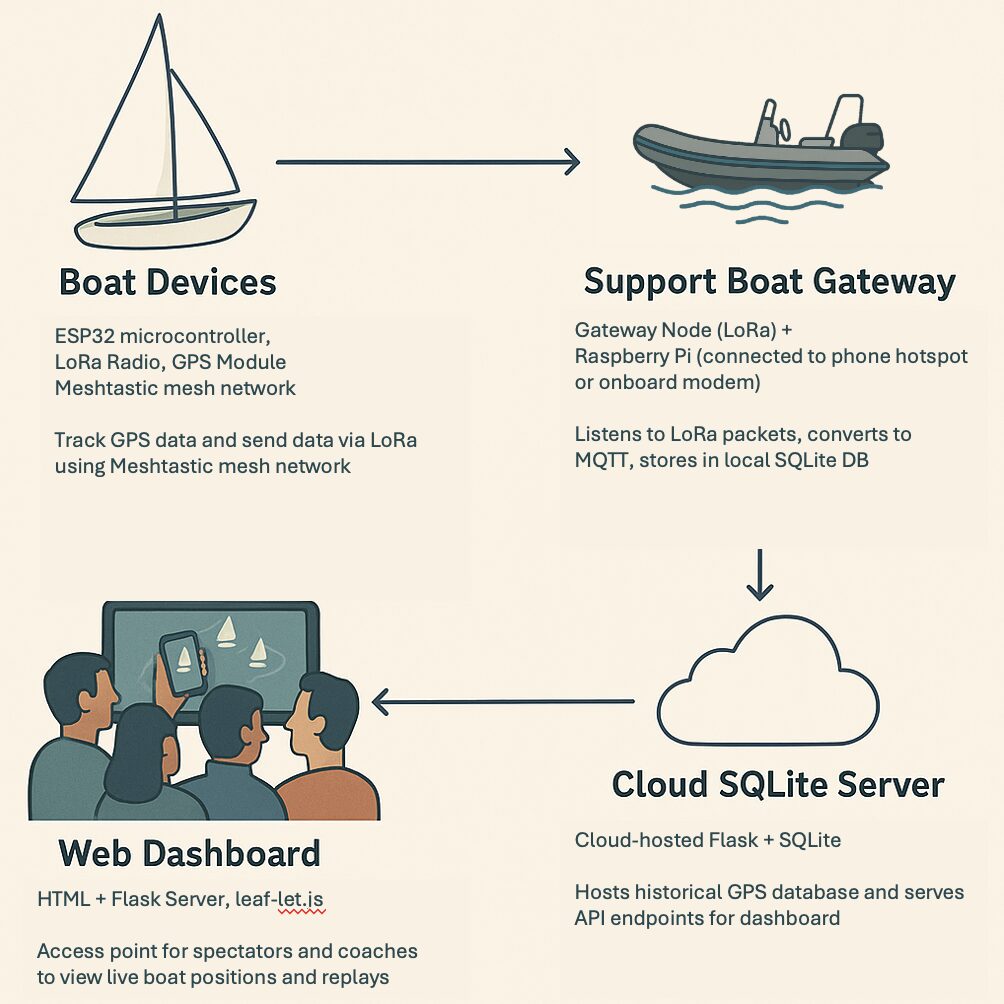
The system is a clean pipeline. Each stage uses open-source software and off-the-shelf components, so the whole thing can be rebuilt, audited and extended by anyone.

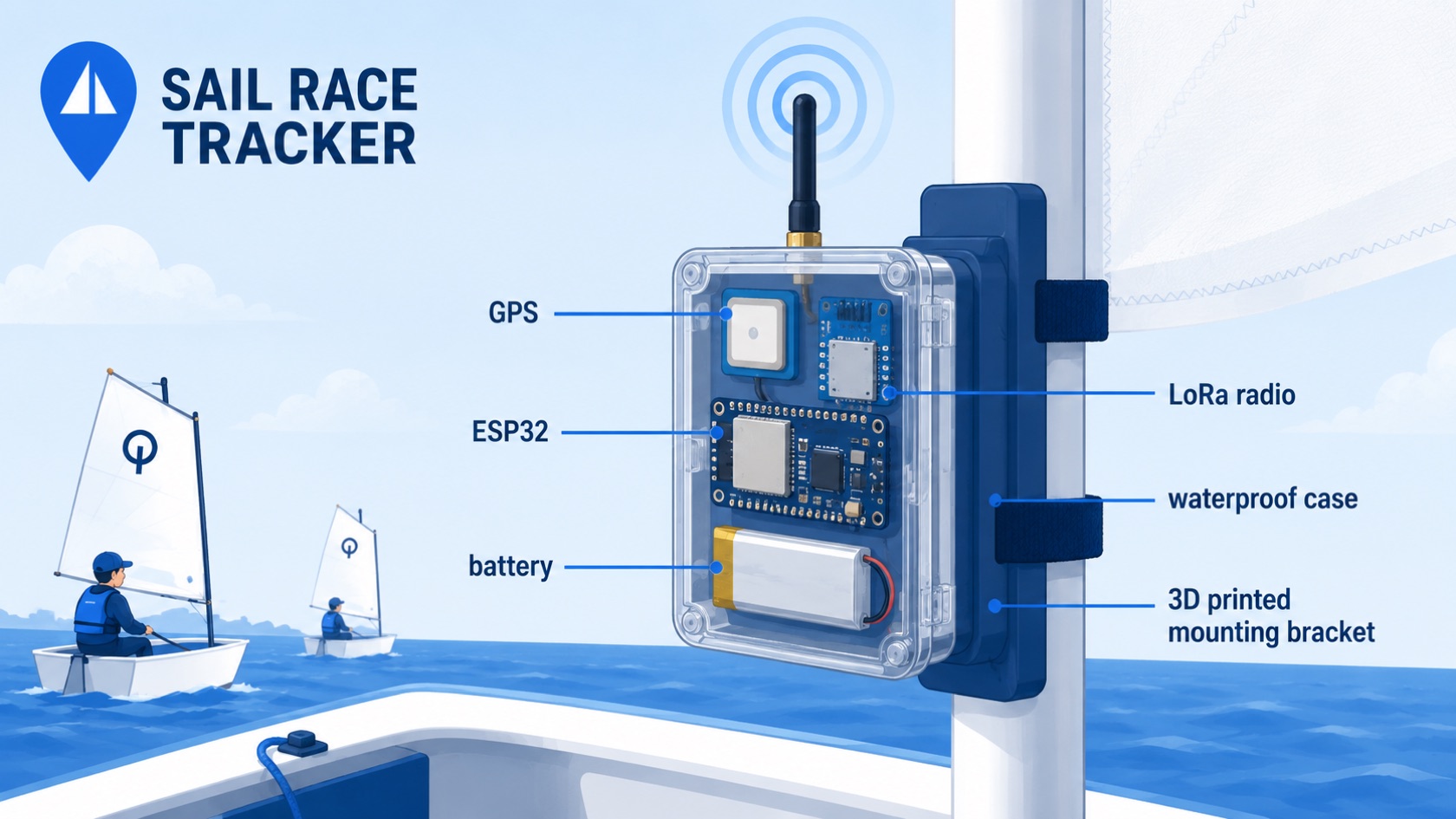
A waterproof, mast-mounted unit (an ESP32-class board with a LoRa radio and a high-accuracy GPS module) reads the boat's position several times per second.
Positions are sent over long-range LoRa radio — no cellular data, no SIM — using a time-slotted (TDMA) scheme so many boats can share the airwaves without collisions.
A base radio on a support boat receives every fix and passes them over serial to a Raspberry Pi gateway running a small Python service.
The gateway posts fixes to a lightweight cloud backend that stores the tracks and fans them out live to connected viewers.
A browser dashboard plots every boat, its heading and trail, the course marks and start line, a live leaderboard, a wind indicator and a full replay timeline you can scrub and speed up.
ESP32-class boards (such as the LilyGo/TTGO LoRa32) carry a long-range LoRa transceiver and an on-board display for field debugging.
NEO-M8N GPS modules were chosen for fast fixes and good accuracy — essential for tight, mark-rounding race tactics.
An IP67-rated case and a custom 3D-printed mast mount keep the electronics dry and steady through spray, capsizes and pool testing.
A Raspberry Pi reads the base radio over serial and relays fixes to the cloud — the bridge between the on-water mesh and the internet.
Each unit is self-contained and rechargeable, with no SIM card and no data plan — nothing to subscribe to and nothing to renew.
Because there is no phone aboard, the system respects the racing rules that ban phones and external aids on the boat.
The web dashboard is built on Leaflet, with a vanilla-JavaScript engine that draws boat markers as heading-rotated sails, progressive coloured trails, the start line and course marks, a course-derived wind dial, and a live-sorted leaderboard that understands legs, mark roundings and finishes. A playback engine interpolates between GPS samples so replays are smooth, with play, pause, scrub and 2×–30× speed controls.
Behind it, a Python gateway service moves data from the on-water radio mesh to a small cloud backend that stores tracks and streams them live to viewers over WebSockets. The public showcase site itself is a fast, hand-coded static site (HTML, CSS and JavaScript) with an embedded, self-contained version of the live replay viewer — the same one you can try on the Tracker Demo page.
Open the tracker demoSystems like RaceQs, Sailmon and Yellowbrick are excellent but expensive — typically NZ$500–900 per unit with ongoing subscriptions, and often built around phones or cellular data. For a youth fleet of a dozen or more boats, that cost is out of reach, and phones aren't even allowed in racing.
Replay your own races, compare lines against the fleet, and learn faster from real data instead of memory.
See the whole fleet at once — safer racing, clearer starts and finishes, and better-informed decisions.
Debrief with hard evidence: who went where, when, and why it worked — across every boat, not just the few you could watch.
Follow the action live from the shore, finally able to tell which boat is which and how the race is unfolding.
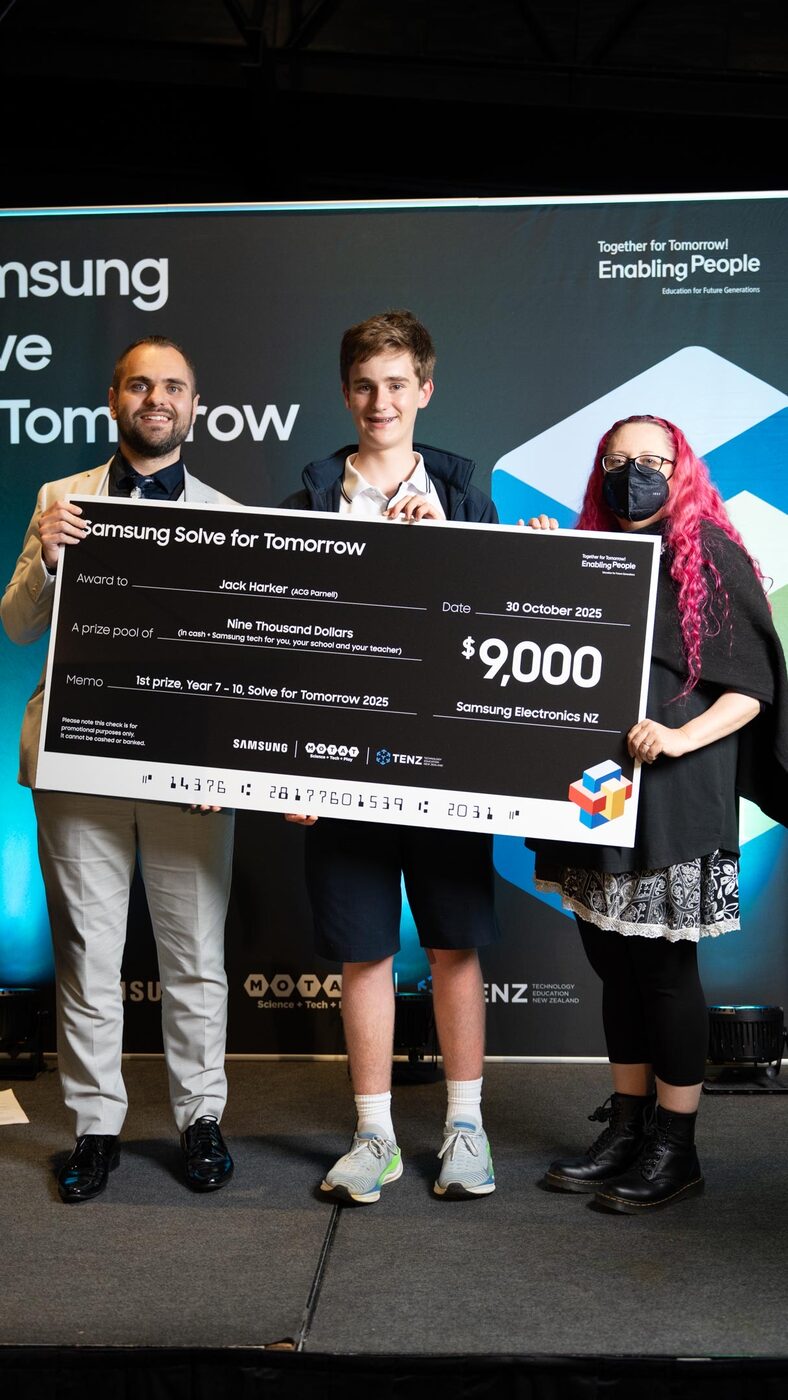
Sail Race Tracker won 1st Prize (Years 7–10) at Samsung Solve for Tomorrow 2025 — a NZ$9,000 prize pool awarded on 30 October 2025 in partnership with MOTAT and TENZ — and took 1st place in the Technology category at the NIWA Auckland City Science & Technology Fair 2025. It was featured on Radio New Zealand and recognised by Samsung New Zealand and Technology Education New Zealand.
A Radio New Zealand interview on building affordable, open-source tech for the sailing community.
Featured on Samsung New Zealand's Solve for Tomorrow winners page.
"Young Kiwi innovators shine at Samsung's Solve for Tomorrow competition."
"Innovation and creativity on display as Samsung crowns Solve for Tomorrow winners."
Each boat carries a small, waterproof LoRa GPS tracker that broadcasts its position over long-range radio. Those positions hop through a radio mesh to a support-boat gateway and a Raspberry Pi, which relays the data to a live web dashboard. Spectators open the dashboard in any browser and watch the whole fleet move around the course in real time — no SIM cards and no subscriptions required.
Commercial sailing trackers such as RaceQs, Sailmon and Yellowbrick typically cost roughly NZ$500–900 per unit plus ongoing subscriptions. Sail Race Tracker is open-source and SIM-free, so a club can build trackers from off-the-shelf parts for a fraction of that cost with no monthly fees.
Yes. Sail Race Tracker uses long-range LoRa radio instead of cellular data, so each boat needs no phone or SIM. That matters because phones are banned under racing rules and mobile data is expensive and unreliable on the water.
I did — I'm Jack Harker, a youth sailor and student at ACG Parnell in Auckland, New Zealand. I designed and built it entirely from open-source software and off-the-shelf hardware, so clubs and schools can build and adapt their own.
This covers the essentials — for the full reference, see all 231 questions and answers across every part of the system.
See the system in action and read the full story:
Replay real GPS race tracks — scrub the timeline and follow the leaderboard.
The hardware, software and field-test story in full.
The award, the press coverage and the year-long journey.
The Samsung Solve for Tomorrow film — the problem, the build, and the system on the water.
An iPad app that helps non-speaking people take part in real-time conversation, in their own voice. Find it at parley.help.
A related project worth supporting — Parley (parley.help), an assistive-communication iPad app that lets non-speaking people stay in the conversation, in their own voice. Questions, or want to bring Sail Race Tracker to your club? Email info@sailracetracker.live.
Replay real race tracks on the demo dashboard, or see how a school project became an award-winning system.