The story

One young sailor, a real problem, and a year of building.

I'm a competitive youth sailor in the Starling and 29er classes. I built Sail Race Tracker because youth sailing is exciting but almost impossible to follow from shore — and the technology that fixes it shouldn't only exist at the America's Cup.

★ The award

Winner — Samsung Solve for Tomorrow 2025

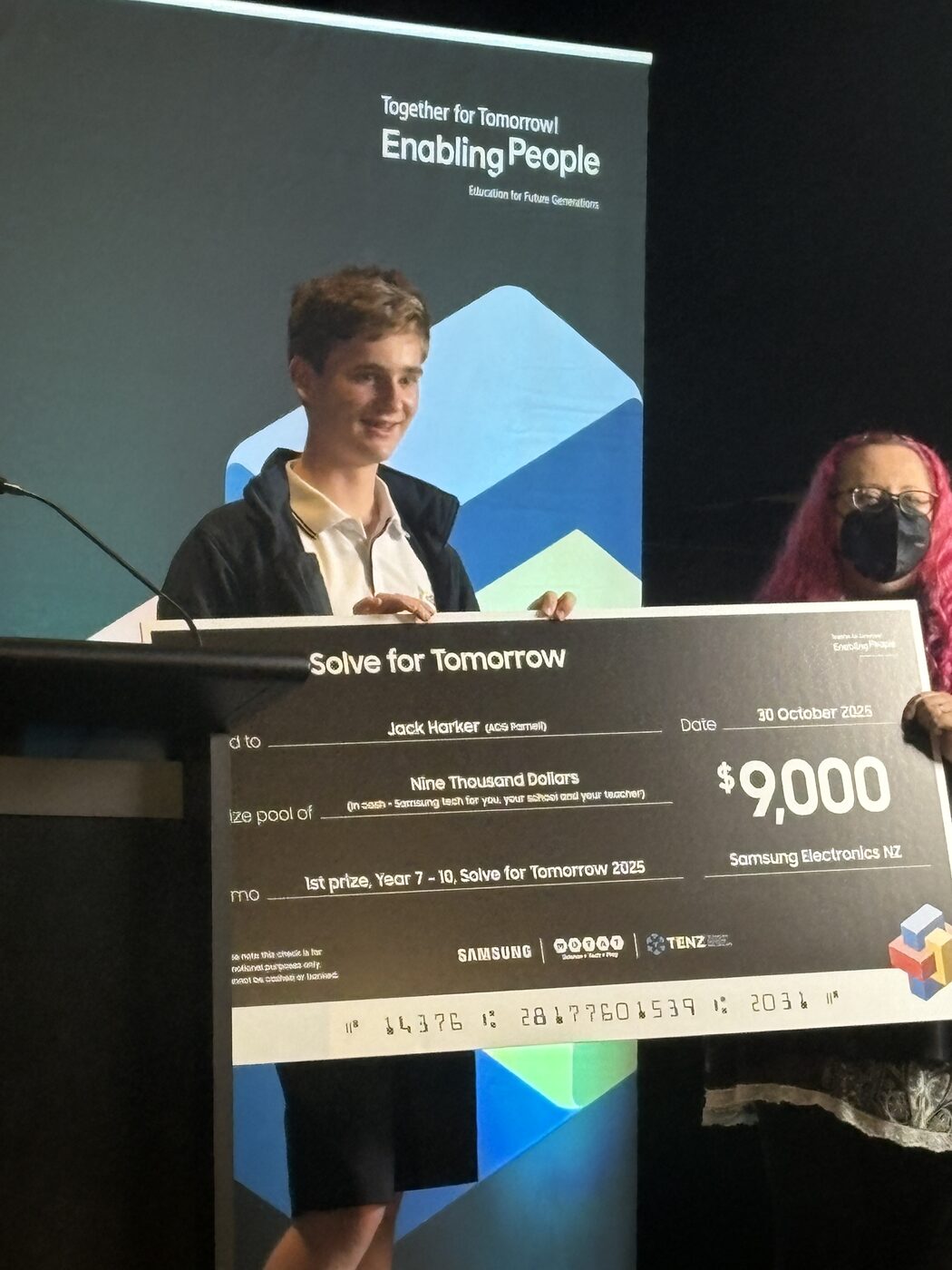
Sail Race Tracker took 1st prize in the Years 7–10 category of Samsung Solve for Tomorrow New Zealand — a NZ$9,000 prize pool (cash plus Samsung tech for me, my school and my teacher), awarded on 30 October 2025 in partnership with MOTAT and TENZ.
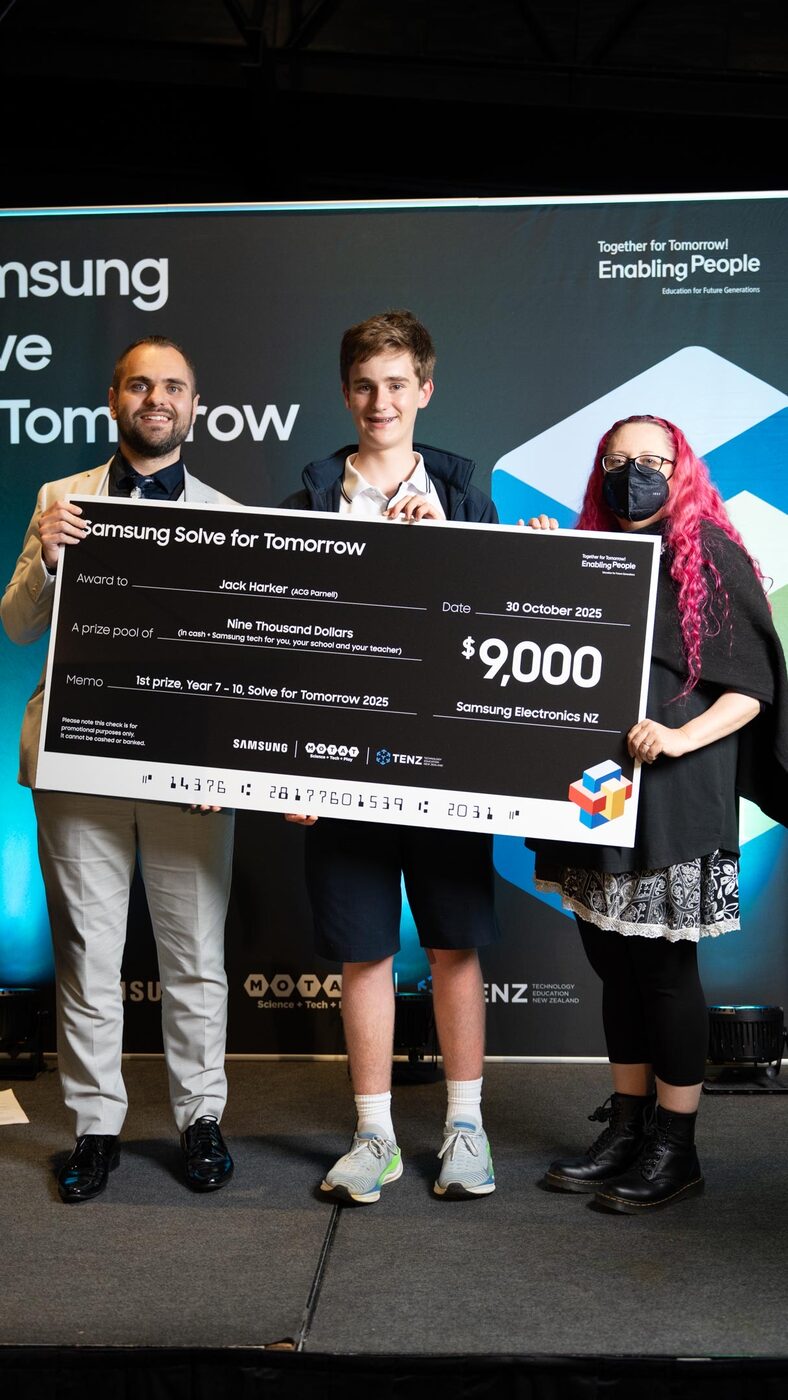
Jack Harker accepting the Samsung Solve for Tomorrow 1st prize cheque for NZ$9,000
Accepting 1st prize — NZ$9,000, Samsung Solve for Tomorrow 2025.
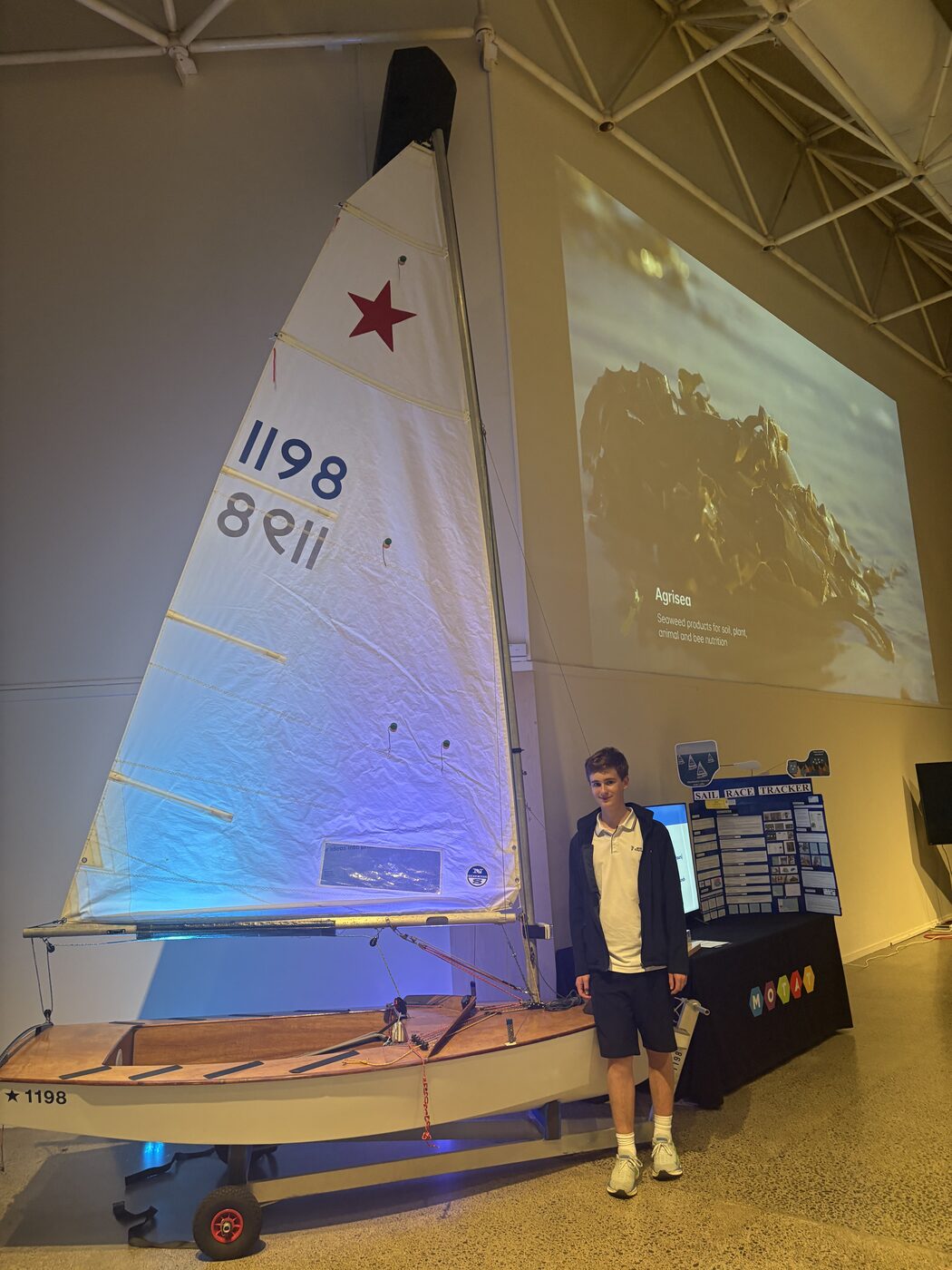
The Sail Race Tracker display at MOTAT with the Starling dinghy
The project on display at MOTAT, alongside Starling #1198.
0
prize pool (NZD)
1st
place, Years 7–10
2025
Solve for Tomorrow NZ
MOTAT
× Samsung × TENZ
In the press

Covered by RNZ, Samsung & TENZ.

Sail Race Tracker was featured on Radio New Zealand and recognised by Samsung New Zealand and Technology Education New Zealand.

🎙 RNZ · Nine to Noon

"Solve for Tomorrow winners tackle race tracking and mountain bike safety"

A Radio New Zealand interview on building affordable, open-source technology for the sailing community.

Listen on RNZ →
The journey

Research to regatta, in six phases.

Given the complexity, I started by mapping a roadmap and setting milestones, documenting every step in a detailed log book.

"This prototype proves it's possible to build a low-cost, real-time GPS race-tracking system using open-source tools and off-the-shelf components — far more cost-effective than anything on the market, with no expensive data plans or subscriptions."
  1. Phase 1

    Research & concept

    Studied SailGP, the America's Cup and commercial trackers; chose LoRa and the open-source Meshtastic ecosystem.

  2. Phase 2

    System architecture

    Defined users and needs, then designed the full boat → mesh → gateway → Pi → dashboard flow.

  3. Phase 3

    Hardware build

    Acquired, labelled and tested boards; flashed firmware; validated GPS fix, LoRa transmission and mesh comms.

  4. Phase 4

    Software development

    Wrote the Python MQTT listener, designed the database, built the Flask API and the Leaflet dashboard.

  5. Phase 5

    Field testing

    Bench, pool and on-water trials with RAYC; logged data and interviewed coaches, sailors and parents.

  6. Phase 6

    Finalise prototype

    Refined waterproofing, charging, device assignment and replay tools for real event use.

Documented end to end

A rigorously recorded build.

Every decision, dead-end and breakthrough was captured — using AI as a 24/7 research tutor while all the testing, coding and assembly was done hands-on.

0
documented build iterations
0
topics & threads worked through
0
pages of log book
0
words of research & notes
Acknowledgements

It took a community.

Huge thanks to the coaches, sailors and parents at Royal Akarana, Kohimarama, Wakatere and Maraetai Beach boating clubs, and to Yachting New Zealand, NZIODA and High Performance Sport NZ for their insight. Thanks to my friend Clemens for help with the web hosting — and to my family, for their patience with parts charging in the kitchen and enclosures being tested in the pool.

See how it works under the hood.

The hardware, the software, the dashboard and the field-test results.

Explore the build